Cat Silhouette Vector Illustration Art
A Designer’s First Glance: Clean, Calm, and Quietly Expressive
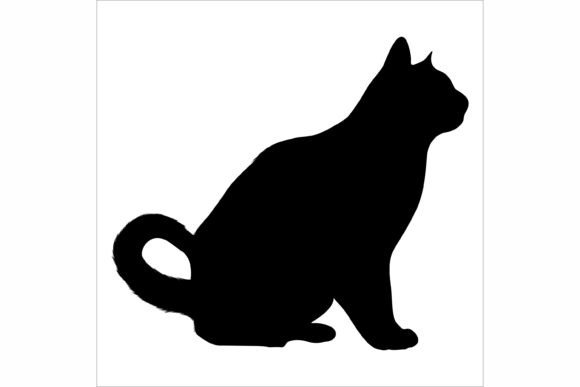
When I opened Cat Silhouette Vector Illustration Art, my eye landed instantly on the posture — not a playful pounce or a dramatic arch, but a grounded, serene sitting pose. The whiskers are subtle but legible; the tail curls with gentle volume, not sharp geometry. It doesn’t shout “cat” — it suggests cat, with quiet confidence. That matters. For embroidery, especially on apparel or home goods, a design that reads clearly at 2–3 inches but still feels thoughtful at 6 inches is gold. This isn’t cartoonish or overly stylized. It’s neutral enough for nursery decor, refined enough for boutique aprons, and warm enough for personalized baby blankets.
Where It Shines in Real Embroidery Projects
I tested Cat Silhouette Vector Illustration Art as the centerpiece for a custom embroidered tote bag — cotton canvas, medium-weight, black base fabric. Paired with soft ecru thread and a light tear-away stabilizer, the result was clean, balanced, and unmistakably handmade. No bleeding, no distortion. The silhouette held its shape beautifully across the slight curve of the bag’s side panel. It also worked well scaled down to 1.75" for a matching baby onesie — the whiskers remained visible (though I did double-check stitch density in that area), and the tail retained its soft flow without turning into a fuzzy blob.
For small business owners: this design slots naturally into product lines like cat-themed kitchen towels, minimalist pillow covers, or embroidered patches for craft fair booths. Etsy sellers will appreciate how easily it pairs with neutral palettes — think oatmeal linen tea towels or heather-gray sweatshirts. As a machine embroidery design, it avoids over-detailing that would bog down fill stitch areas or cause thread breaks on older machines. There’s no fine linework demanding ultra-precise satin stitch — just confident outlines and intentional negative space.
Where to Pause — Not a Flaw, Just a Fit Check
This isn’t a one-size-fits-all embroidery file. On highly textured fabrics like bouclé or thick terry cloth, the whiskers may soften or disappear unless you adjust stitch length and add cutaway stabilizer. On stretchy knits — say, a lightweight crewneck — I’d recommend digitizing it with a slightly wider satin border or converting key edges to running stitch for flexibility. And while it handles dark fabric beautifully (especially in cream or pale gray thread), avoid pairing it with very thin fabrics like voile or chiffon without backing — the silhouette’s clarity depends on clean fabric support.
Curved surfaces like caps or structured hats need extra attention. I tried it on a low-profile trucker cap — the tail’s curve flattened slightly at the crown seam. A minor tweak to the vector’s top arc before digitizing would solve that. Also, don’t assume it’s ready for sub-1.5" applications without testing: the tip of the tail and outer whisker ends are delicate. If your target product is tiny embroidered earrings or keychain patches, verify those endpoints hold up in your test stitch-out.
What It Adds to Your Finished Product — Beyond Looks
Cat Silhouette Vector Illustration Art elevates perceived value without complexity. Customers notice the calm confidence in the pose — it signals care, not clutter. That translates directly to trust: a buyer choosing a handmade embroidered pillow cover isn’t just buying decor; they’re buying intention. For craft businesses, that subtlety supports brand consistency — whether you’re selling pet memorial gifts or modern nursery sets, this design doesn’t compete with your voice; it complements it.
It also boosts giftability. I used it on a set of holiday tea towels last December — simple, elegant, seasonally flexible (no bells, no bows, no dated motifs). Buyers commented on how “timeless” it felt. That’s rare in cat-themed design, where cuteness often leans dated. And for digital product sellers: this works cleanly in printable mockups. Its vector foundation means crisp scaling for social previews, listing thumbnails, and branding assets — no pixelation, no reworking.
Practical Notes Every Embroiderer Should Run Through
- Always test first — stitch Cat Silhouette Vector Illustration Art on scrap fabric matching your final product’s weight and weave.
- Check contrast — run black-and-white mockups to confirm visibility on both light and dark backgrounds before committing to thread colors.
- Review stitch density — especially in the tail curl and whisker zone. Overly dense fills can cause puckering on lightweight cottons.
- Confirm hoop size compatibility — while the vector itself is scalable, your embroidery file’s bounding box must fit your standard hoops (e.g., 4x4", 5x7").
- Inspect small details — zoom in on whiskers and tail tip in your embroidery software. Are they digitized as single running stitches or fragile satin lines? Adjust if needed.
- Stabilizer choice matters — use cutaway for knits, tear-away for stable wovens, and fusible + tear-away for nap-free fabrics like towels.
- Licensing check — since this falls under Illustrations and Graphics, verify commercial use rights before selling finished embroidered items or bundling it into digital embroidery kits.
Final Thought: A Quiet Anchor for Thoughtful Making
Cat Silhouette Vector Illustration Art won’t dominate a garment or overwhelm a shelf — and that’s its strength. In a market flooded with busy, high-contrast, trend-chasing designs, this one breathes. It fits seamlessly into custom apparel, baby embroidery, holiday embroidery, and commercial embroidery work — not because it’s flashy, but because it’s resolved. As a designer and reviewer, I reach for it when I want elegance without effort, personality without noise, and craftsmanship that feels intentional, not incidental. For anyone building a craft business, curating a boutique line, or simply making something meaningful by hand: this is the kind of design that earns repeat use — quietly, reliably, and with grace.