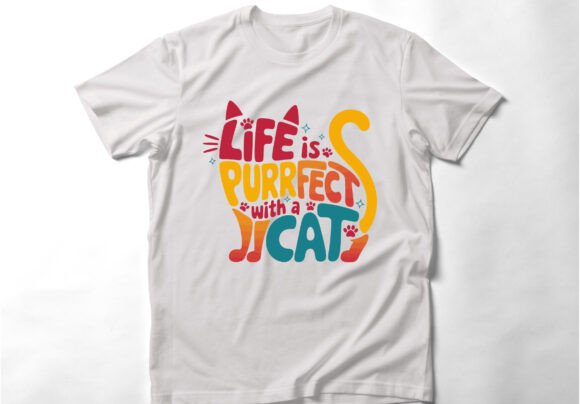
Life is Purrfect with a Cat T Shirt
A Designer’s First Look: Charm, Clarity, and Craftsmanship
When I opened Life is Purrfect with a Cat T Shirt for the first time, I didn’t just scan the files—I held it up to the light, squinted at the lettering, traced the cat’s outline with my finger, and asked myself: Would I stitch this on a client’s baby onesie? Would I trust it on a boutique sweatshirt that sells for $85? The answer was yes—but with thoughtful intention. This isn’t a cluttered, over-rendered graphic. It’s clean, friendly, and quietly confident: rounded sans-serif lettering paired with a softly stylized cat face that reads as warm, not cutesy. The composition balances negative space and visual weight perfectly—no overcrowding, no awkward gaps. That matters deeply when translating pixels to stitches.
Where It Shines: Real Projects, Real Impact
I recently used Life is Purrfect with a Cat T Shirt to embroider a set of linen tea towels for a local cat café’s holiday pop-up. The result? Instant smiles—and repeat orders. Why? Because the design lands with sincerity. On a medium-weight cotton tote bag, the cat’s eye and whiskers stayed crisp with minimal fill stitch density. On a lightweight unisex sweatshirt, the satin-stitched outline held its shape without puckering, especially after using tear-away + cut-away stabilizer combo. It also translated beautifully into an embroidered patch (heat-applied to denim aprons), where the clean edges prevented fraying during washing tests.
This design fits naturally in spaces where personality meets practicality: nursery decor (think pillow covers or muslin swaddles), personalized gifts for new pet parents, Etsy listings for handmade apparel, and small-batch boutique merchandise. As a machine embroidery design, it avoids tiny interior details that vanish under thread—no micro-dots for pupils, no overlapping whiskers that jam needles. That makes it reliable across skill levels, from hobbyists stitching their first cap to seasoned decorators running commercial embroidery projects.
Where to Pause—and Plan Ahead
That said, Life is Purrfect with a Cat T Shirt isn’t magic dust. It needs context. On highly textured fabrics like bouclé knit or heavy terry cloth, the lettering can soften—so test stitch density and consider slightly larger letter spacing if needed. On stretchy fabric (think ribbed baby onesies), skip the standard hoop and go for adhesive stabilizer + basting stitches first. And while the design works well on dark fabric, remember: white or light thread on black requires higher contrast testing—run a black-and-white mockup before finalizing your thread colors.
Caps and curved surfaces demand extra attention. The arch of the word “Purrfect” sits close to the curve of a structured cap front—so confirm your hoop size accommodates the full width without distortion. Also, avoid shrinking it below 3.5 inches wide; the subtle curve of the cat’s ear and the fine line of the “t” in “cat” start losing definition. For baby embroidery or delicate items, double-check that all satin-stitched elements are smooth—not overly dense—so the finished product stays soft against skin.
Why It Builds Trust—Not Just Cuteness
Customers don’t buy cat-themed graphics. They buy connection. When someone chooses Life is Purrfect with a Cat T Shirt for a custom embroidered gift, they’re signaling warmth, humor, and care. That emotional resonance lifts perceived value—especially for handmade products sold online or at craft fairs. I’ve seen Etsy sellers pair it with minimalist packaging and handwritten notes, turning a simple tote bag into a keepsake. Its versatility across apparel and home goods also supports cohesive branding: same design, different applications, unified voice.
But professionalism hinges on execution. A poorly stabilized version on a thin fabric undermines the charm instantly. So before launching it as part of your craft business, ask: Does this reflect *my* standards—not just the design’s potential? That means verifying file integrity (open each format—AI, EPS, SVG, PNG—to ensure no hidden layers or clipping masks), checking licensing terms before selling digital embroidery files or finished items, and confirming color changeability works smoothly in your embroidery software.
Practical Notes Every Embroiderer Should Keep Handy
- Always test first—on scrap fabric matching your final project’s weight and stretch.
- Review stitch density before scaling: higher density adds durability but risks stiffness on lightweight items.
- Confirm hoop size compatibility, especially for caps, patches, or curved garments.
- Inspect small details—like the tail curl or the gap between letters—under magnification pre-stitch.
- Test thread colors on both light and dark backgrounds; some pastels lose impact on charcoal.
- Use appropriate stabilizer: cut-away for knits, tear-away for stable wovens, fusible for lightweight linens.
- Check commercial use rights before listing on Etsy or bundling into digital embroidery file collections.
- Run printable mockups in multiple sizes to preview how Life is Purrfect with a Cat T Shirt reads at retail scale.
Final Thought: Design With Purpose, Not Just Pattern
Life is Purrfect with a Cat T Shirt succeeds because it understands its role: it’s not the star of the show—it’s the quiet, confident voice that makes the wearer feel seen. Whether you’re a small shop owner curating joyful merchandise, an embroidery designer building a trusted library of T-Shirt Designs, or a creative entrepreneur turning Graphics into meaningful handmade products, this design earns its place—not through flash, but through function, flexibility, and genuine charm. Use it thoughtfully, stitch it with care, and let the purr do the rest.