Minimal Animal Silhouette Featuring Ele
A Designer’s First Look: Clean, Calm, and Confidently Simple
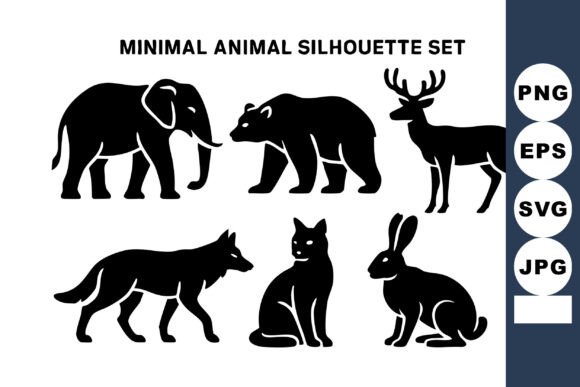
When I opened Minimal Animal Silhouette Featuring Ele, my first thought wasn’t “cute” or “trendy”—it was “breathable.” That’s rare. In a sea of overworked embroidery designs packed with gradients, outlines, and decorative flourishes, this vector lands like quiet confidence. Six animals—elephant, bear, deer, fox, cat, rabbit—arranged in a balanced, airy layout. No overlapping, no fuss. Just bold black silhouettes, clean edges, and intentional negative space. It feels elegant without trying too hard, modern without losing warmth. For embroidery designers who value clarity over clutter, this isn’t just another illustration—it’s a thoughtful starting point.
Where This Design Truly Shines in Real Projects
I tested Minimal Animal Silhouette Featuring Ele on a custom organic cotton tote bag for a local nursery boutique—and it worked beautifully. The elephant anchored the composition; the smaller silhouettes added rhythm without competing. Because the shapes are solid and uncomplicated, they translated cleanly into satin stitch with minimal fill density. No floating threads, no skipped stitches, even at 3.5" wide. It also held up well on a soft unisex sweatshirt—especially when paired with a lightweight tear-away stabilizer. The design reads instantly from across a craft fair booth, which matters when you’re selling handmade product to time-pressed parents or gift shoppers.
It’s equally effective on baby onesies (using gentle cut-away stabilizer), tea towels (where simplicity reads as premium), and embroidered patches meant for denim jackets or backpacks. As an embroidery file, its strength lies in versatility: it works for personalization (a child’s name + one animal), boutique branding (subtle corner placement on aprons), and holiday embroidery (think minimalist stockings or linen pillow covers). Etsy sellers will appreciate how easily it fits into printable mockups—clean lines mean crisp digital previews that convert.
Where to Proceed With Care
That same elegance becomes a limitation in certain contexts. On highly textured fabrics—like bouclé knit or thick terry cloth—the silhouette edges can blur slightly unless you adjust stitch density manually. And while the design is forgiving on stable wovens, it’s not ideal for stretchy fabric without proper stabilization and careful hooping—those smooth curves can distort if the base shifts mid-stitch.
Small hoop sizes (under 4") demand attention: the rabbit and fox sit close together, so tight spacing risks thread nesting if your machine’s tension isn’t dialed in. Also avoid placing Minimal Animal Silhouette Featuring Ele directly over seams or curved surfaces like cap fronts unless you’ve pre-tested on scrap with the same fabric-and-stabilizer combo. There’s no fine linework or tiny interior detail to lose—but there *is* precision in the contour, and that contour needs room to breathe.
What It Adds to Your Finished Product—Beyond Stitching
This isn’t just about whether the design sews out cleanly. It’s about what it says before the first stitch hits fabric. Customers notice restraint. A clean silhouette signals intentionality—whether it’s a personalized gift for a new parent (elephant for wisdom, rabbit for gentleness) or a small shop product that stands apart from mass-produced alternatives. That perception elevates perceived value. Buyers trust handmade product more when the design feels curated, not crowded.
For craft business owners, it supports brand consistency effortlessly: pair it with neutral thread colors (charcoal, oat, deep navy) and it fits seamlessly across apparel, home goods, and nursery decor. And because it avoids cliché (no hearts, no cursive names, no cartoon expressions), it stays relevant across seasons—making it a smart long-term addition to your design assets.
Practical Notes Every Embroidery Designer Should Keep Handy
- Always test on scrap fabric first—especially if using dark thread on light fabric or vice versa. The bold black silhouette gains or loses impact depending on contrast.
- Review stitch density before running full production. Too dense? It’ll pucker thin fabric. Too sparse? The shape may look fragmented on coarse weaves.
- Confirm hoop size compatibility. While the layout is clean, the full arrangement spans roughly 5–6" wide—so verify your machine’s max hoop capacity.
- Inspect corners and curves closely in your embroidery software. Smooth contours matter more here than intricate details.
- Test black-and-white mockups before finalizing product photos. This design relies on shape—not color—so grayscale previews should still feel strong.
- Compare light and dark fabric backgrounds. On black fabric, white or cream thread creates a softer, more delicate effect; on ivory, black thread delivers bold graphic impact.
- Use appropriate stabilizer: lightweight cut-away for knits, tear-away for stable wovens, and fusible for lightweight linens.
- Check licensing terms carefully. As a Graphics category Illustrations asset, confirm whether commercial use—including sale of finished embroidered items or digital embroidery files—is permitted before listing on Etsy or bundling into craft kits.
Final Thought: Less Isn’t Just More—It’s Measured, Memorable, and Made to Last
Minimal Animal Silhouette Featuring Ele doesn’t shout. It invites. It gives space—for stitching, for fabric, for the person wearing or gifting the finished product. In real-world embroidery work—whether you’re stitching baby onesies at midnight or prepping 50 tote bags for a boutique launch—this kind of design saves time, reduces rework, and quietly builds trust. It’s not flashy. It’s functional, refined, and ready for real life. If your goal is to create embroidered patch collections, custom apparel with soul, or small shop products that feel both handmade and intentional, this is one of those rare machine embroidery designs that earns its place in your working library—not just your inspiration folder.