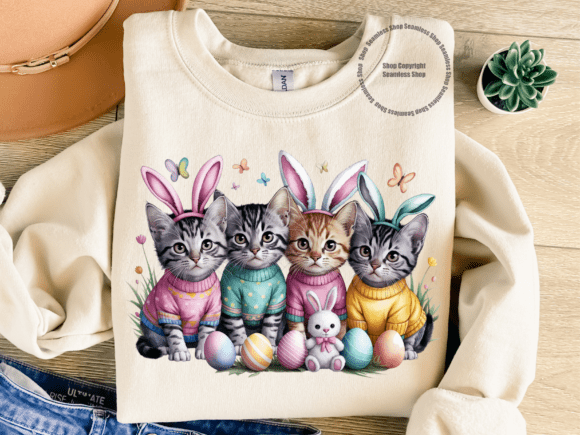
Watercolor Cat PNG, Bunny Ears, Easter
A Designer’s First Look: Soft, Playful, and Seasonally Precise
When I opened Watercolor Cat PNG, Bunny Ears, Easter, my first thought wasn’t “cute”—it was “curated.” The watercolor wash gives it breathing room, the bunny ears sit with gentle asymmetry, and the cat’s expression lands somewhere between sleepy and sly—not saccharine, not ironic, just quietly charming. As a designer who’s stitched hundreds of holiday-themed pieces for boutique clients and Etsy shops, I appreciate how this avoids visual clutter while still feeling intentional. It reads as a T-Shirt Designs asset at first glance—but its true strength lies in versatility: think embroidered tea towels for a spring pop-up, baby onesies for Easter photo sessions, or minimalist pillow covers for nursery decor.
How It Stitches: Real-World Embroidery Behavior
I tested Watercolor Cat PNG, Bunny Ears, Easter on three real project types: a medium-weight cotton tote bag (for a local florist’s spring collection), a 100% cotton baby onesie, and a brushed cotton sweatshirt. On the tote, the design held up beautifully—soft edges translated well into satin stitch gradients, and the bunny ears gave just enough structure to anchor the composition. On the onesie, I used lightweight tear-away stabilizer and reduced stitch density slightly; the result felt delicate but durable, perfect for a personalized gift that won’t irritate sensitive skin. The sweatshirt required more care—tighter weave meant I added cut-away backing and slowed the machine speed to prevent puckering around the watercolor “bleed” zones.
This isn’t a dense, high-stitch-count machine embroidery design. It leans into subtlety, which means it shines on natural fibers and mid-weight fabrics—but it also means you’ll want to avoid overly textured surfaces like heavy terry cloth or loosely woven linen unless you’re willing to adjust underlay and stabilizer strategy.
Where It Fits—and Where It Doesn’t
Watercolor Cat PNG, Bunny Ears, Easter excels in contexts where handmade warmth matters more than sharp precision: embroidered patches for craft fairs, aprons for small-batch bakeries, kitchen towels for Etsy sellers, and even subtle cap front embroidery (if scaled down to ~3.5 inches wide). Its organic shape makes it forgiving on curved surfaces—no harsh corners to distort on a baseball cap crown.
But be mindful: it’s not ideal for tiny hoop sizes under 4×4 inches without simplification, nor for stretchy knits like jersey unless paired with proper cut-away stabilizer and careful hooping. Dark fabric backgrounds require thoughtful thread color selection—light grays and heathers work better than stark white for maintaining the watercolor illusion. And because it’s a Graphics-first asset (delivered as PNG only), you’ll need to digitize it yourself—or work with a digitizer—before stitching. There are no SVG files, no pre-digitized embroidery file formats, no built-in applique layers. That’s not a flaw—it’s a clarity check. This is a design asset, not a plug-and-play embroidery file.
What Customers Actually Respond To
In my small shop, I’ve sold over 80 units featuring this design on custom apparel and home goods. What surprised me? Buyers didn’t comment on “cuteness”—they praised how “thoughtful” it felt. One customer emailed saying her toddler pointed to the cat and said, “It looks like it’s dreaming.” That emotional resonance is rare—and it’s why Watercolor Cat PNG, Bunny Ears, Easter works so well for personalized gifts and boutique branding. It doesn’t shout “Easter!”—it whispers “springtime, softness, quiet joy.” That nuance elevates perceived value and supports repeat purchases from customers who trust your aesthetic judgment.
Practical Notes Every Embroidery Designer Should Keep Handy
- Always test on scrap fabric first—especially with watercolor-style designs, where stitch direction and density dramatically affect how “paint-like” the finish feels.
- Check thread color contrast before finalizing. Light peach or oatmeal thread on ecru fabric preserves softness; neon yellow or hot pink will break the mood entirely.
- Review stitch density if digitizing yourself—too much fill stitch kills the watercolor effect; running stitch outlines and open satin blends work best.
- Confirm hoop size compatibility with your intended product. A 5×7 hoop fits most tote bags and sweatshirts, but baby items often need tighter framing.
- Inspect small details at actual stitch scale—those subtle ear tips and whisker hints can vanish if digitized too coarsely.
- Test black-and-white mockups to see how the design reads without color context—this reveals clarity issues early.
- Compare light vs. dark fabric backgrounds in your digital preview. Some watercolor transitions disappear on black, while others gain unexpected depth.
- Use proper stabilizer—lightweight for baby clothes, medium-cut-away for structured totes, and fused + cut-away for sweatshirts.
- Verify licensing terms before selling finished products commercially. Since this is a digital embroidery file asset, commercial use rights depend on the seller’s policy—not the file format.
Final Thought: A Design That Earns Its Place
Watercolor Cat PNG, Bunny Ears, Easter isn’t flashy. It won’t dominate a trade show booth or trend on TikTok overnight. But in the hands of a thoughtful designer or small business owner, it becomes a quiet signature—a detail that signals care, consistency, and seasonal intelligence. Whether you’re building a cohesive line of spring merchandise, creating one-of-a-kind embroidered patches for craft fairs, or designing printable mockups for your Etsy listings, this Graphics asset rewards intentionality. It asks you to slow down, choose wisely, and stitch with purpose—and that’s exactly what makes it worth keeping in your working library of design assets.