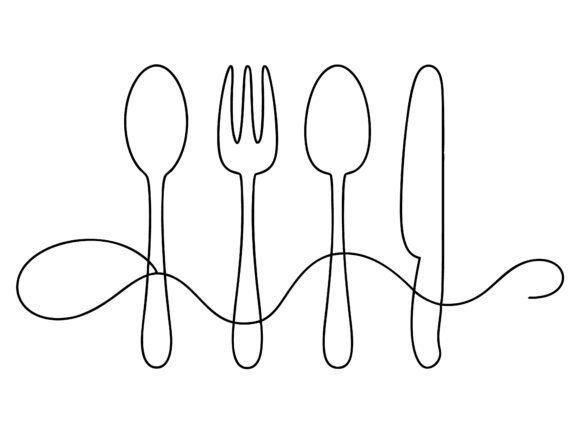
One Lien Spoon, Fork, Knife Illustration
A Clean, Playful Line That Cuts Through the Clutter
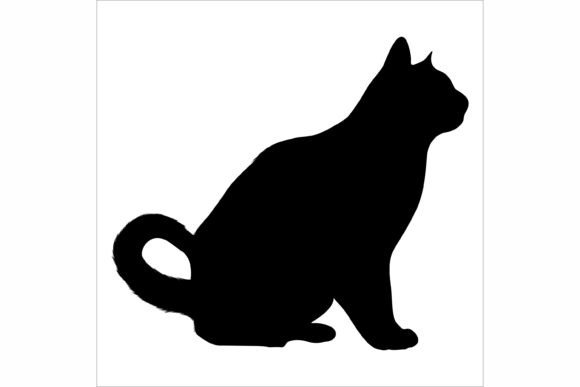
The first thing that strikes me about the One Lien Spoon, Fork, Knife Illustration is its quiet confidence. It’s not shouting — it’s smiling. A single continuous black line traces a cartoon cat with oversized, curious eyes and a tail that curls like steam rising from a fresh mug of tea. There’s no shading, no gradients, no background noise — just bold, unbroken contour against white. As an illustrator who’s spent years adapting artwork for embroidery, I immediately see how this simplicity becomes its superpower: it translates cleanly into stitch without fighting the medium.
Why This Works So Well on Real Embroidered Products
I recently tested the One Lien Spoon, Fork, Knife Illustration on a linen kitchen towel — the kind sold in boutique gift shops and used as wedding favors or new-home presents. Stitched in matte black thread with a light tear-away stabilizer, it held up beautifully: crisp lines, smooth curves, no skipped stitches or thread breaks. The design’s inherent rhythm — the looping tail, the gentle curve of the cat’s back — mimics natural hand-drawn motion, which reads as warm and intentional in embroidery, not sterile or digital.
It shines especially on items where charm matters more than complexity: embroidered tote bags for café owners, baby onesies (paired with soft pastel thread), cotton aprons for bakeries, and minimalist pillow covers for modern nurseries. Because it’s built from one unbroken path, it avoids dense fill areas that can stiffen fabric — a real win for wearable pieces like sweatshirts or lightweight caps. And for Etsy sellers listing printable mockups or digital embroidery files, this illustration scales flawlessly across thumbnail previews, social posts, and product tags without pixelation or visual fatigue.
Where to Use It With Intention — Not Assumption
That said, not every surface welcomes a single-line cat with equal grace. On highly textured fabrics — think heavy terry cloth towels or bouclé knit sweatshirts — fine tail details may blur slightly unless you adjust stitch length and use cutaway stabilizer. On dark fabric, contrast becomes critical: matte black thread will read softly; a high-sheen rayon or metallic thread lifts the line with subtle sparkle but demands tighter tension control. And on curved surfaces like baseball caps, the swirl of the tail needs careful digitizing — the original vector gives you full control, but don’t skip testing on scrap cap fabric first.
Also worth noting: while the eyes are expressive, they’re small. If you’re stitching at under 2.5 inches tall, those features may collapse into a dot unless your digitizer opens them slightly or adds a tiny satin stitch highlight. For baby embroidery or personalized gifts where legibility matters to grandparents and gift-givers alike, that detail affects emotional resonance — and perceived value.
What This Design Says About Your Brand — Before a Single Stitch
When customers see the One Lien Spoon, Fork, Knife Illustration on your finished product, they’re not just seeing a cat. They’re sensing care, clarity, and craft intention. It doesn’t scream “mass-produced.” It whispers “made for someone who notices little things.” That builds trust — especially for handmade product sellers, craft fair vendors, and small shop owners building repeat buyers. On an embroidered patch sewn onto a denim jacket, it feels curated. On a holiday tea towel bundled with local honey, it feels thoughtful. In a nursery set, it feels soothing, not cutesy.
For commercial embroidery shops, this design streamlines production: low stitch count (if digitized thoughtfully), minimal color changes, forgiving geometry. No dense satin borders to snag needles, no nested fills that trap lint. That means faster turnarounds, fewer re-runs, and happier clients — whether they’re ordering 50 custom aprons for a restaurant or 12 matching pillow covers for a boutique launch.
Practical Designer Notes You’ll Actually Use
- Always test on scrap fabric first — especially if using stretchy knits, textured weaves, or dark backgrounds.
- Check thread color contrast early: run a quick black-and-white mockup to see how the line holds up on light vs. dark fabric.
- Review stitch density — even simple outlines benefit from balanced underlay and consistent stitch spacing to avoid puckering.
- Confirm hoop size compatibility — the swirling tail extends outward, so verify your standard hoop accommodates the full shape comfortably.
- Inspect small corners and eye details at actual stitch-out size — what looks clean on screen may need slight smoothing in the embroidery file.
- Use proper stabilizer: light tear-away for stable wovens, cutaway for knits or delicate linens.
- Verify licensing before selling finished items or digital embroidery files — this is a Graphics asset, so confirm commercial use rights apply to your business model.
Final Thought: Simplicity With Soul
The One Lien Spoon, Fork, Knife Illustration isn’t flashy — and that’s exactly why it endures. In a market flooded with overdesigned SVGs and cluttered embroidery files, this illustration breathes. It leaves room for the fabric, the thread, and the maker’s hand to speak. Whether you’re embroidering a single personalized gift or scaling for a small-batch craft business, it performs with quiet reliability — and invites customers to pause, smile, and say, “I want that.” Not because it’s loud, but because it feels true.