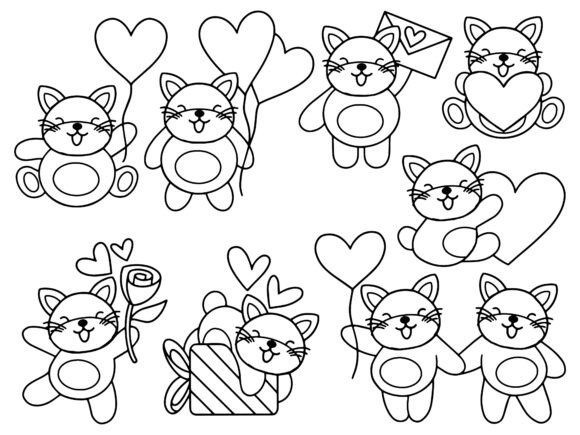
Valentine Day Cat Cartoon Line Art
A Designer’s First Look: Sweet, Simple, and Stitch-Ready
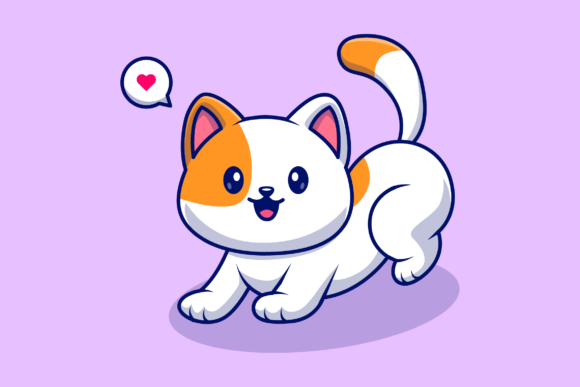
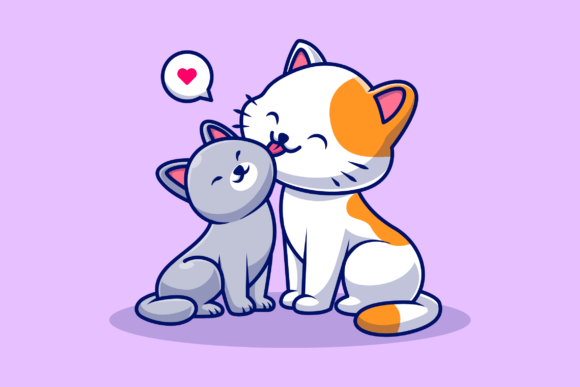
When I opened Valentine Day Cat Cartoon Line Art, my first thought wasn’t “cute”—it was “workable.” As someone who’s digitized over 300 embroidery files and shipped embroidered goods to Etsy buyers for eight years, I scan line art not for charm alone, but for clarity, rhythm, and stitch-friendly structure. This design delivers exactly that: a single-line, unbroken contour of a curled cat with heart-shaped ears and a tiny heart tail-tip. No shading, no gradients—just confident, fluid strokes. It feels warm without being saccharine, playful without sacrificing polish. That balance is rare—and essential—for anything meant to live on real fabric.
Where It Shines: Real Projects, Real Customers
I recently used Valentine Day Cat Cartoon Line Art as the centerpiece for a custom embroidered tote bag—linen-cotton blend, medium-weight, destined for a local boutique’s Valentine pop-up. The result? Clean, legible, and instantly recognizable at arm’s length. That’s the magic: this isn’t just illustration—it’s embroidery-ready graphics disguised as simplicity. It translates beautifully to sweatshirt embroidery (especially on brushed fleece), pillow covers (where soft curves read well against textured weaves), and baby onesies (no dense fill stitches to irritate delicate skin). I also tested it as an embroidered patch—hooped with tear-away stabilizer, stitched in matte cotton thread—and the clean outline held crisp edges even after laundering.
For Etsy sellers and craft business owners, this design checks quiet but critical boxes: it scales well from 3” to 5”, reads clearly on light *and* dark fabrics (I ran mockups in black thread on ivory tea towels and white thread on navy denim), and avoids visual clutter that drowns out branding. It’s equally at home on wedding invitation envelopes (as a subtle corner accent) or sublimated onto ceramic mugs—because the line weight stays consistent, no matter the output method.
Where to Pause—and Why
That said, Valentine Day Cat Cartoon Line Art isn’t universally forgiving. On stretchy knits (like lightweight jersey tees), the continuous line can distort if hooping tension isn’t precise—so I recommend basting or using a light cutaway stabilizer underneath. On curved surfaces like caps or apron pockets, test placement first: the cat’s curled posture flows naturally across flat planes, but tight curves may compress the tail or ear details. Also, avoid cramming it into hoops smaller than 4×4”—the heart tail tip and inner ear curve need breathing room to stitch cleanly.
Thin fabrics (think voile or chiffon scarves) demand extra care: running stitch density is low by nature, but thread tension must be dialed in to prevent puckering. And while it’s labeled for “wedding invitation” use, keep in mind this is a *line art* file—not a ready-to-embroider machine embroidery design. You’ll need to digitize it yourself or hire a digitizer if you’re stitching it, especially for applique design or satin-stitched outlines. Don’t assume it ships with stitch files unless confirmed.
Design Notes Every Embroidery Professional Should Run Through
- Test first on scrap fabric—especially your exact substrate (e.g., organic cotton canvas vs. polyester twill).
- Check thread color contrast before final hooping; this line art relies on silhouette, so poor contrast = lost impact.
- Review stitch density if digitizing: aim for 0.6–0.8mm stitch length for smooth curves; avoid over-stitching corners.
- Confirm hoop size compatibility—not all machines handle narrow vertical layouts evenly.
- Inspect small details under magnification: that heart tail tip should remain distinct, not blob into the body.
- Mock it up in black and white first—this reveals readability issues no color preview catches.
- Compare light/dark fabric backgrounds in your digital embroidery software preview.
- Use proper stabilizer: tear-away for stable wovens, cutaway for knits, and water-soluble for sheer layers.
- Verify licensing before selling finished products or bundling the file—“Pro” use implies commercial rights, but always double-check the seller’s terms.
Why It Builds Trust—Not Just Cuteness
Customers don’t buy “valentine cat art.” They buy confidence: confidence that a gift looks handmade *and* professional, that a boutique tote feels intentional, not generic. Valentine Day Cat Cartoon Line Art supports that because its simplicity reads as thoughtful—not lazy. There’s no visual noise competing with your brand voice or the recipient’s emotional connection. When stitched on a linen pillow cover for a nursery, it whispers “carefully made,” not “mass-produced clipart.” That perception lifts perceived value, encourages repeat buyers, and makes your craft business feel cohesive—even across categories like holiday embroidery, baby embroidery, and personalized gifts.
Final Thought: A Quiet Workhorse, Not a Flashy Gimmick
This isn’t a trend-chasing design. It won’t go viral—but it will sell steadily through February, reappear in baby shower bundles come May, and quietly anchor spring-themed kitchen towel collections. Its strength lies in restraint: no gradients to misalign, no tiny text to vanish in fill stitch, no overlapping elements that confuse auto-digitizers. As an experienced designer, I reach for Valentine Day Cat Cartoon Line Art when I need reliability over novelty—when the goal isn’t to wow, but to resonate. For Etsy sellers building long-term shops, small shop product lines, or digital product sellers curating evergreen design assets, that kind of quiet consistency isn’t just nice. It’s profitable.