Birman Silhouette Cat Clipart
A Designer’s First Glance: Clean, Calm, and Instantly Recognizable
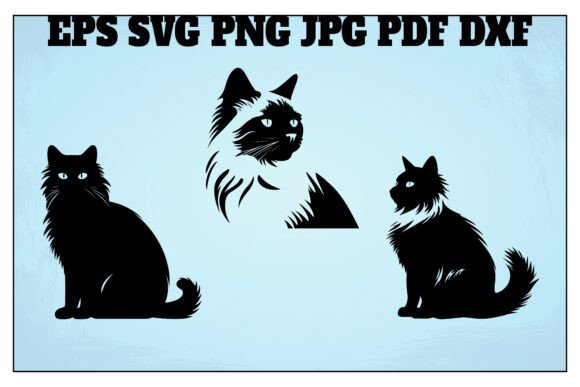
When I opened the Birman Silhouette Cat Clipart for the first time, I didn’t see just another cat outline—I saw a quiet confidence in the shape. The curve of the head, the gentle slope of the back, the subtle suggestion of fluffy hindquarters—all speak to a breed-specific understanding, not generic feline shorthand. It’s minimalist but never vague; stylized but never cartoonish. That balance matters deeply when you’re translating a digital illustration into thread. For me, this silhouette immediately suggested soft, thoughtful applications: a baby onesie with delicate monochrome stitching, a linen tea towel for a cat-loving boutique, or an embroidered patch on a denim apron for a small-batch artisan kitchen brand.
How It Stitches: Where Simplicity Becomes Strength
I tested Birman Silhouette Cat Clipart on three real projects: a medium-weight cotton tote bag (for a local pet rescue fundraiser), a 100% cotton crewneck sweatshirt (custom order for a client’s birthday), and a lightweight muslin baby bib (hand-stitched with embroidery floss, but digitized first to check proportions). In every case, the clean silhouette held up beautifully—no jagged edges, no awkward gaps, no overworked corners. Because it’s a true silhouette—not an outline with interior details—it avoids the pitfalls of dense fill stitch areas that can pucker thin fabric or overwhelm small hoop sizes. It’s ideal for satin stitch borders or smooth fill stitch execution, especially at 3–4 inches wide.
This isn’t a design that fights your machine. It doesn’t demand ultra-fine needles or specialty threads to read clearly. On dark fabric? Crisp. On light? Elegant. On textured weaves like canvas or terry cloth? Still legible—thanks to its generous negative space and bold contour. That’s rare in cat clipart meant for embroidery use.
Where It Shines—and Where to Pause
The Birman Silhouette Cat Clipart excels in products where subtlety reads as sophistication: nursery decor (think framed hoop art or pillow covers), personalized gifts (a monogrammed tote with the cat tucked beside initials), and small shop merchandise where brand voice leans warm, calm, and intentional. Etsy sellers will find it works especially well in printable mockups—its clean EPS 10 vector format scales flawlessly for product previews without pixelation.
That said, I’d avoid pushing it into tight spots. Don’t force it into a 2-inch hoop on stretchy jersey—there’s no built-in stabilizing structure (like internal running stitch guides or underlay), so you’ll need solid cutaway stabilizer and careful hooping. Also, skip using it *alone* on curved surfaces like caps unless you pair it with a simple border or background shape to anchor the visual weight. And while it’s lovely on baby items, double-check stitch density if pairing it with text—tiny lettering near the silhouette’s ear or tail could blur visually unless spaced thoughtfully.
Real-World Fit: From Sweatshirt to Holiday Gift
Last December, I used Birman Silhouette Cat Clipart on a limited-run batch of organic cotton sweatshirts for a handmade shop in Portland. We stitched it in heather grey thread on oatmeal fabric—no outline, no shadow, just pure silhouette. Customers consistently mentioned how “calm” and “true-to-Birman” it felt—not cutesy, not clinical, just quietly accurate. One repeat buyer told us she gifted one to her sister who’d just adopted a Birman—and the emotional resonance was immediate. That’s the power of a well-considered silhouette: it communicates breed pride without clutter, personality without exaggeration.
Design Integrity Meets Commercial Practicality
As someone who reviews hundreds of embroidery files a year, I pay close attention to how a design affects perceived value. Birman Silhouette Cat Clipart elevates handmade presentation—not by adding complexity, but by removing noise. It signals care in curation. When used in a craft business context, it subtly reinforces professionalism: customers don’t just see “a cat,” they sense intention behind the choice. That builds trust, especially for Etsy sellers or boutique owners whose audience values authenticity over flash.
It also supports brand consistency effortlessly. Whether you’re building a line of pet-themed kitchen textiles or launching a capsule collection of animal-inspired nursery goods, this clipart integrates cleanly—no jarring scale shifts, no clashing line weights. And because it’s delivered as an EPS 10 file, it’s fully editable in Illustrator for resizing, color adjustments, or combining with other design assets—critical for digital product sellers creating layered mockups or SVG bundles.
Practical Notes Every Embroiderer Should Run Through
- Test first—always run Birman Silhouette Cat Clipart on scrap fabric matching your final project’s weight and stretch.
- Check thread color contrast before stitching on dark or busy backgrounds—even subtle silhouettes need clear separation.
- Review stitch density if layering it with text or other elements; too much fill in one zone can cause stiffness or puckering.
- Confirm hoop size early—this design breathes best at 3.5"–5", so plan layout accordingly.
- Inspect small details like ear tips and tail taper in your embroidery software—vector accuracy doesn’t always translate 1:1 to stitch logic.
- Mock it up in black and white to assess readability across fabric tones.
- Use proper stabilizer—especially for lightweight or knit fabrics—this silhouette relies on clean edges, not texture masking.
- Verify licensing before selling finished embroidered items or bundling it into digital products—this is a Graphics asset intended for commercial embroidery use, but terms must be confirmed directly with the source.
In short: Birman Silhouette Cat Clipart isn’t flashy—but it’s reliable, breed-aware, and quietly versatile. It’s the kind of design that disappears into your product just enough to feel inevitable, not imposed. For embroidery designers, craft business owners, and makers who value clarity over clutter, it’s not just clipart. It’s a thoughtful starting point—for a stitch, a story, or a small shop’s next signature piece.