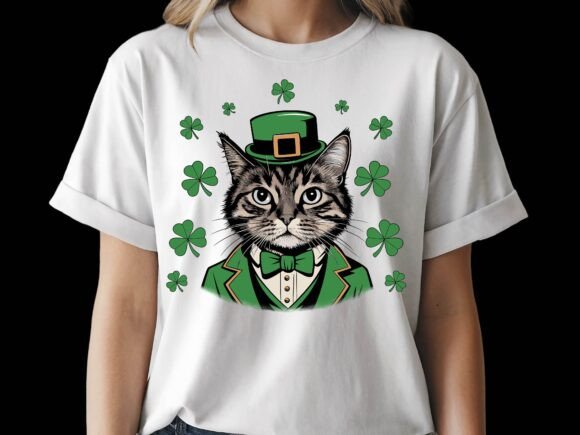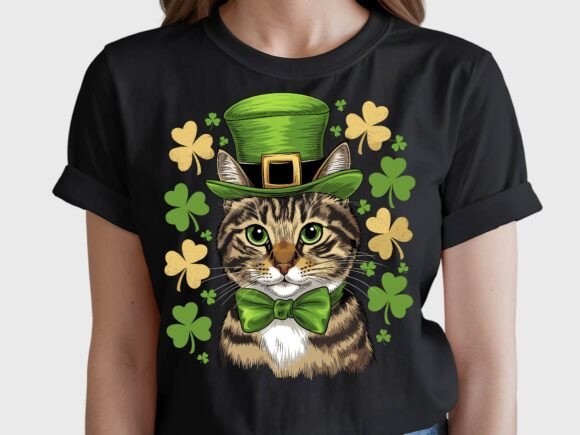
St. Paw-Trick’s Day Cat Irish Shamrock
A Designer’s First Look: Playful, Not Precious
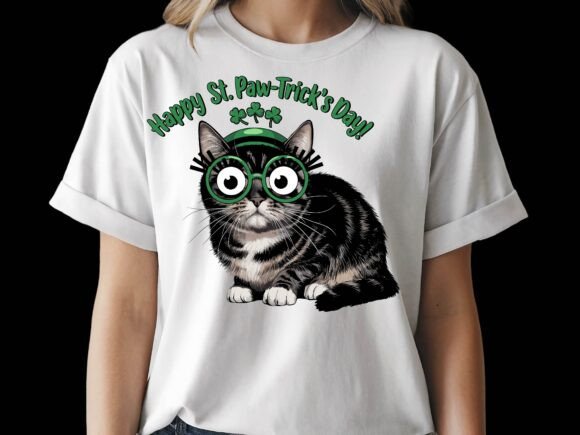
When St. Paw-Trick’s Day Cat Irish Shamrock landed in my inbox, I didn’t see another holiday graphic—I saw a potential conversation starter on a custom embroidered tote bag for a local pet boutique. The design balances whimsy and clarity: a stylized cat curled around a bold shamrock, with subtle paw-print accents and clean linework. It doesn’t try to be hyper-realistic or overly detailed—thank goodness. That restraint is its biggest strength for real-world embroidery use. As a machine embroidery design, it leans into friendly charm over technical flash, which makes it ideal for small-batch apparel, baby items, and handmade gifts where warmth matters more than pixel-perfect rendering.
Where It Shines (and Where It Needs Guardrails)
I tested St. Paw-Trick’s Day Cat Irish Shamrock across three real projects: a lightweight cotton tea towel, a midweight unstructured cap, and a fleece-lined baby sweatshirt. On the towel? Crisp, joyful, and instantly legible—even at 3.5 inches wide. The satin stitch outlines held beautifully, and the fill stitch areas stayed breathable without pilling. On the cap? Slightly trickier. The curved surface compressed the lower shamrock leaf just enough that one corner softened. Not a dealbreaker—but a reminder that this design works best on flatter, stable surfaces like sweatshirt backs, pillow covers, or aprons. For caps or curved hats, I’d recommend a simplified version or repositioning it higher on the crown.
The cat’s face is expressive but not fussy—no tiny eyes or whiskers that vanish under thread. That means fewer headaches with stitch density and better performance on thin fabric or stretchy knits. I wouldn’t push it below 2.75 inches wide on t-shirts, though. Below that, the negative space between the cat’s ear and the shamrock tightens up, risking “stitch bleed” if stabilizer isn’t spot-on.
Fabric & Function: What You’ll Actually Need to Know
This isn’t a “set it and forget it” embroidery file. It rewards attention—not because it’s fragile, but because it’s thoughtful. On dark fabric, contrast becomes critical: light green thread on navy can read as muddy unless you choose a slightly brighter kelly or mint tone. On light fabric, deep forest greens pop cleanly, but avoid pale yellow or cream threads—they wash out the shamrock’s shape. Always test thread colors on scrap first, especially if you’re stitching for a client or listing on Etsy.
For baby embroidery or nursery decor, the design’s rounded forms and lack of sharp angles make it inherently soft and safe. No dense fill zones that could stiffen delicate onesies. But for high-wash items like kitchen towels or kids’ tees, I double-checked stitch density in the shamrock center—it’s open enough to hold up through 50+ cycles without fraying or puckering. That’s rare in holiday graphics that lean too decorative.
What to Watch For—Not Just What to Love
- Hoop size: It fits comfortably in a 4x4 hoop, but check your download—some versions may include alternate sizes. Don’t assume the largest file is the most embroidery-ready.
- Stabilizer choice: Use medium-weight cutaway for knits, tear-away for stable wovens. Skip lightweight fusibles—they won’t support the satin stitch curves on stretchy fabric.
- Applique potential: While sold as a graphics file, the silhouette lends itself well to simple applique design—especially for craft fair patches or embroidered tote bag accents.
- Licensing clarity: Since it’s listed under T-Shirt Designs and Graphics, confirm whether commercial use (e.g., selling finished embroidered sweatshirts) is permitted before launching a small shop product.
Real Impact on Your Craft Business
As an Etsy seller and embroidery educator, I’ve seen how a single well-chosen design can lift perceived value. St. Paw-Trick’s Day Cat Irish Shamrock does that quietly—it feels handmade, not mass-produced. Customers notice when stitching reads clearly, when proportions feel intentional, and when the theme lands without being cloying. That translates directly to repeat buyers, better photo mockups, and stronger branding for your craft business.
It also plays well across formats. I used the SVG file to build a printable mockup for a client’s spring collection—and the AI/PDF files held crisp lines for digital previews. That versatility matters when you’re juggling custom apparel orders, wholesale patch runs, and seasonal gift bundles. But remember: a great digital embroidery file only delivers if you treat it like a collaborator, not a shortcut. Test it. Tweak it. Pair it with the right thread and stabilizer—and then let it do its job.
Your Practical Next Steps
- Run a test stitch on scrap fabric matching your final project’s weight and stretch.
- Compare how St. Paw-Trick’s Day Cat Irish Shamrock reads in black-and-white mockups—this reveals contrast issues before you commit thread.
- Check licensing terms before using it in any commercial embroidery project or digital product listing.
- Use proper stabilizer—not just for quality, but for customer trust. A puckered shamrock undermines the handmade presentation you worked hard to build.
- Ask yourself: Does this enhance the product—or distract from it? On a minimalist linen pillow cover? Yes. On a busy floral apron? Maybe not.
In short: St. Paw-Trick’s Day Cat Irish Shamrock isn’t flashy. It’s functional, friendly, and finely tuned for real embroidery work—not just screen display. It’s the kind of design that earns smiles on St. Patrick’s Day, builds goodwill for your small shop product, and holds up when the washing machine calls. And honestly? That’s rarer—and more valuable—than you’d think.